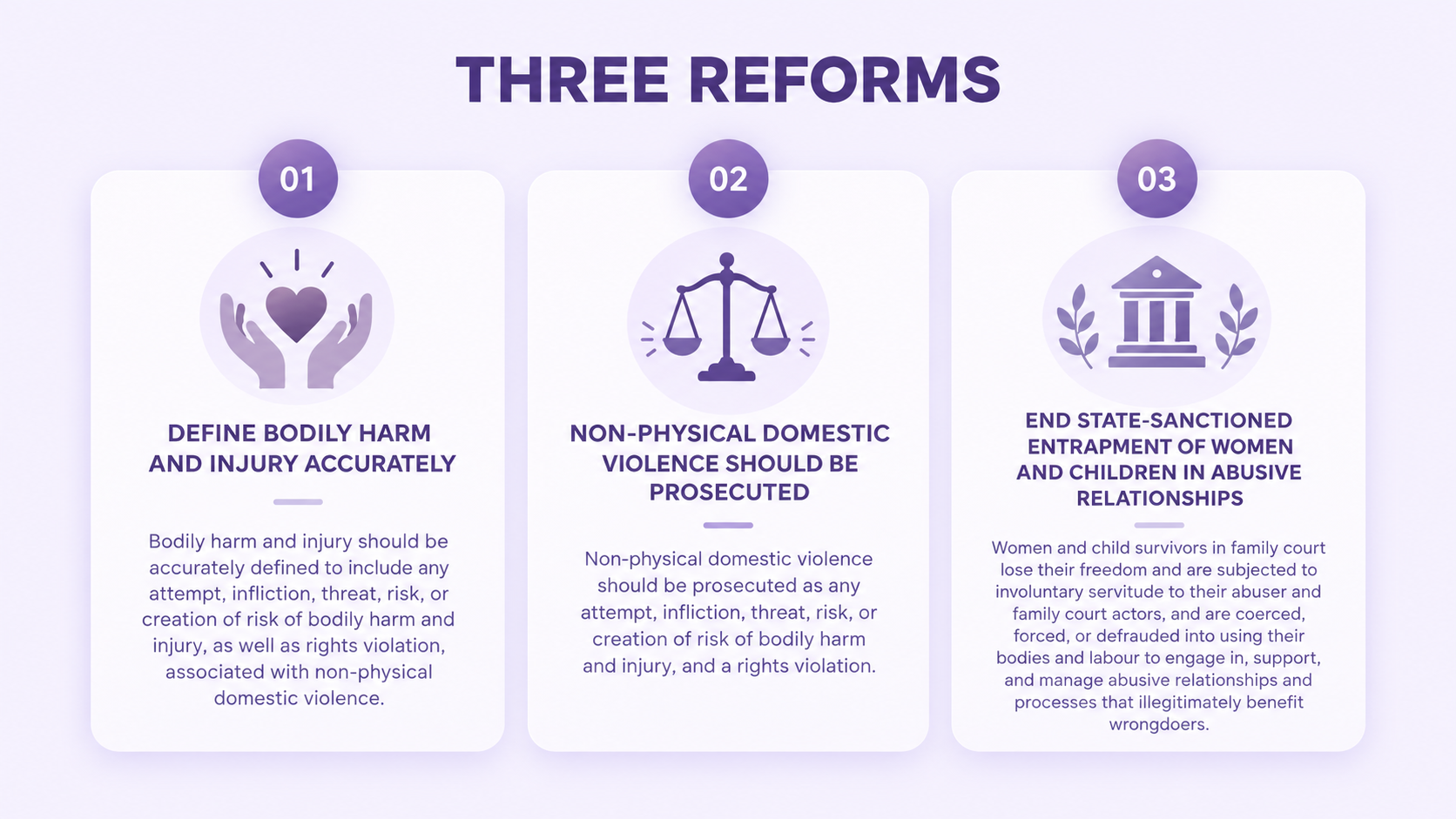
DOMESTIC VIOLENCE: DEFINING BODILY HARM AND INJURY
Decades of global research establishes that domestic violence (DV) against women and children comprises multiple forms of abuse: physical, sexual, emotional, psychological, economic, financial, technological, and reproductive, as well as harassment, stalking, and controlling or coercive behavior, used to gain or maintain power and control. Despite widespread recognition of non-physical DV and its detrimental mental and physical health consequences, legal frameworks inaccurately exclude bodily harm and injury associated with non-physical DV. This failure to value the bodies, and rights, of women and children survivors entraps them in abusive relationships and obstructs protection and accountability for pre- and post-separation abuse.
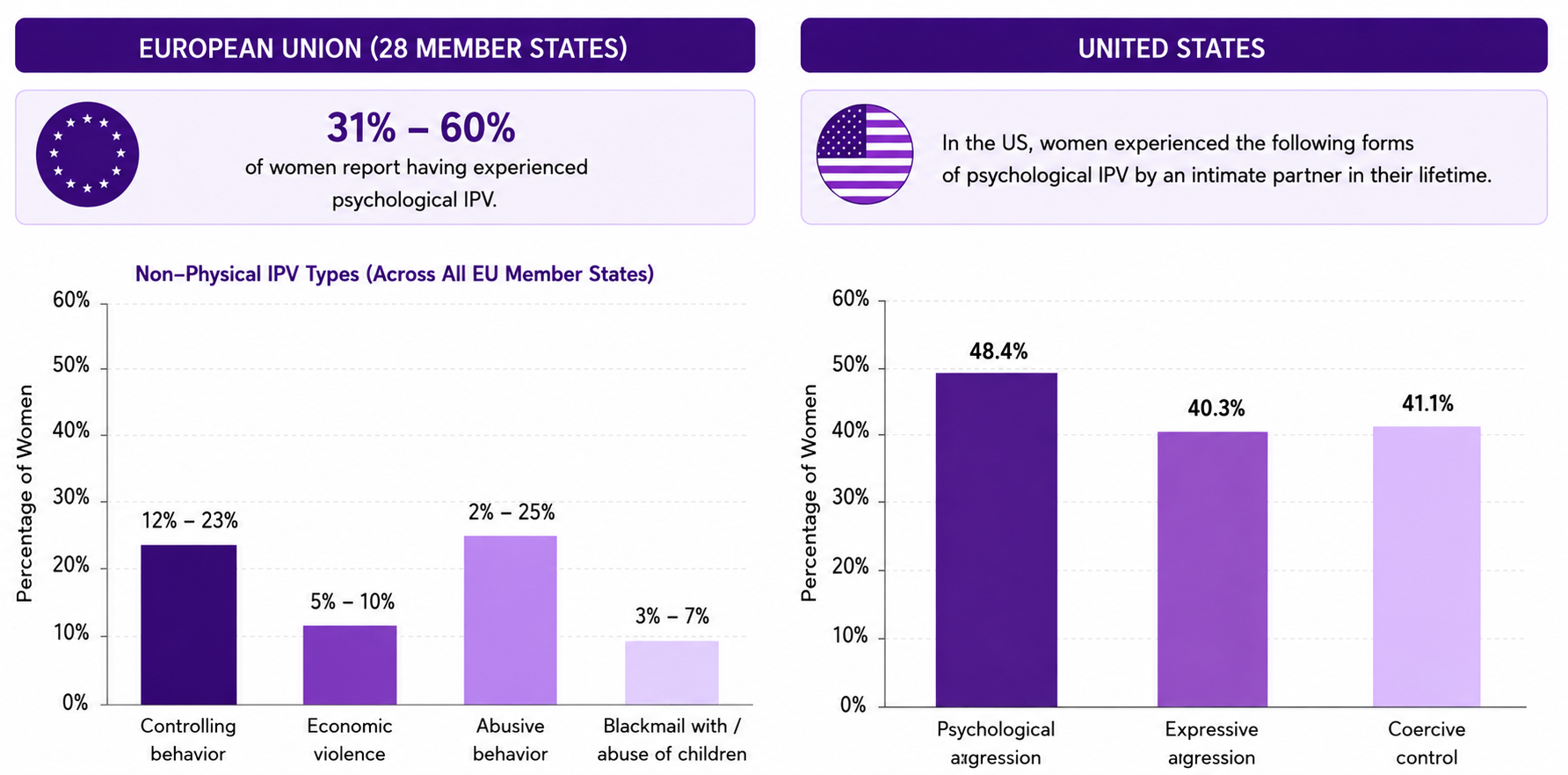
Non-Physical IPV Prevalence
NON-PHYSICAL IPV CAUSES BODILY HARM AND INJURY
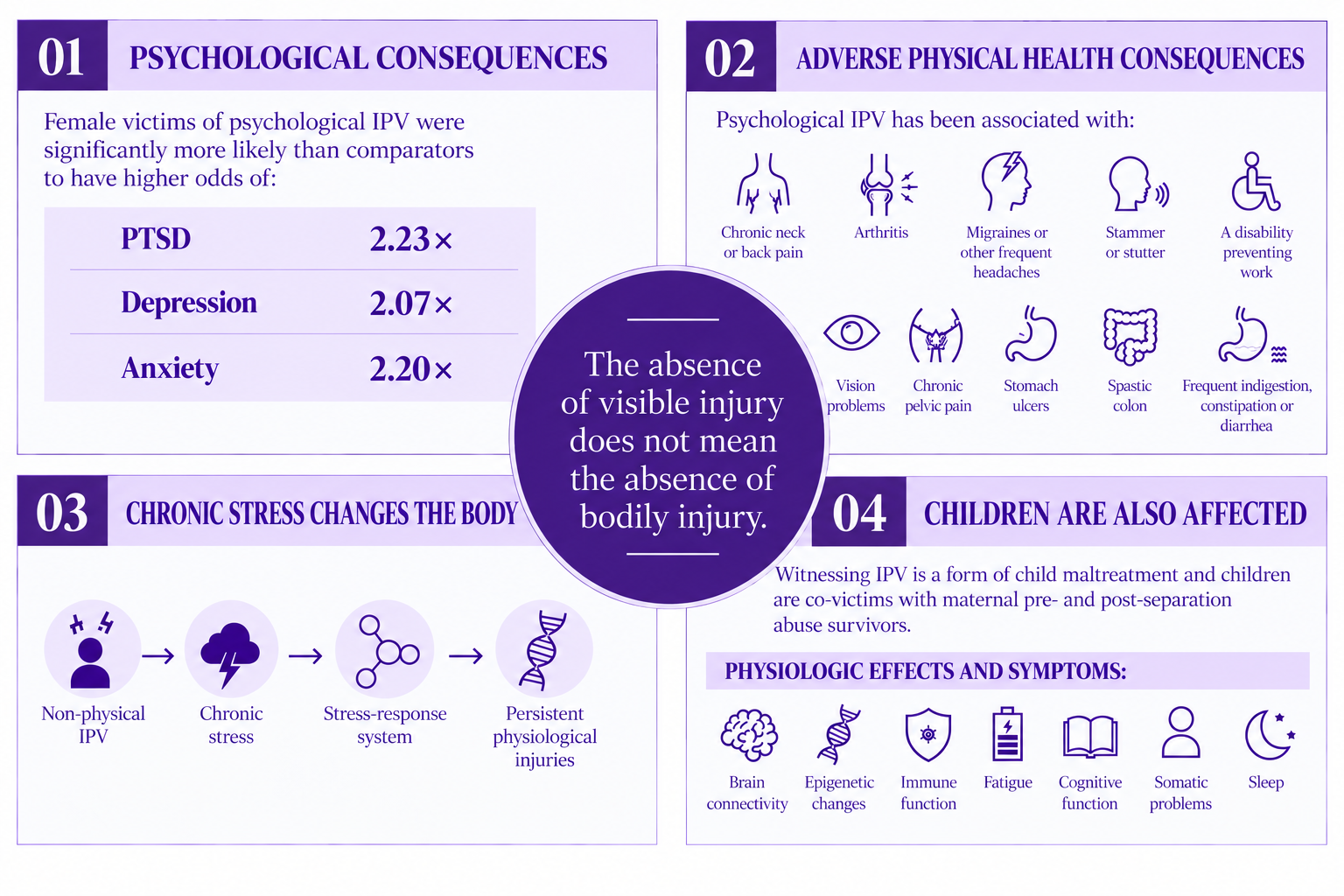
The scientific and evidence base is unequivocal: non-physical domestic violence inflicts and risks bodily harm and injury to women and child survivors’ bodies and violates their rights. The science is indisputable, abuse is not love, and reforms are urgently needed. The legal and justice systems pose barriers to obtaining and enforcing effective protection orders, as well as to prosecuting perpetrators of non-physical domestic violence. These systems entrap women and child survivors in abusive relationships, further victimising them and violating their rights.