ADVERSE CHILDHOOD EXPERIENCES (ACEs)
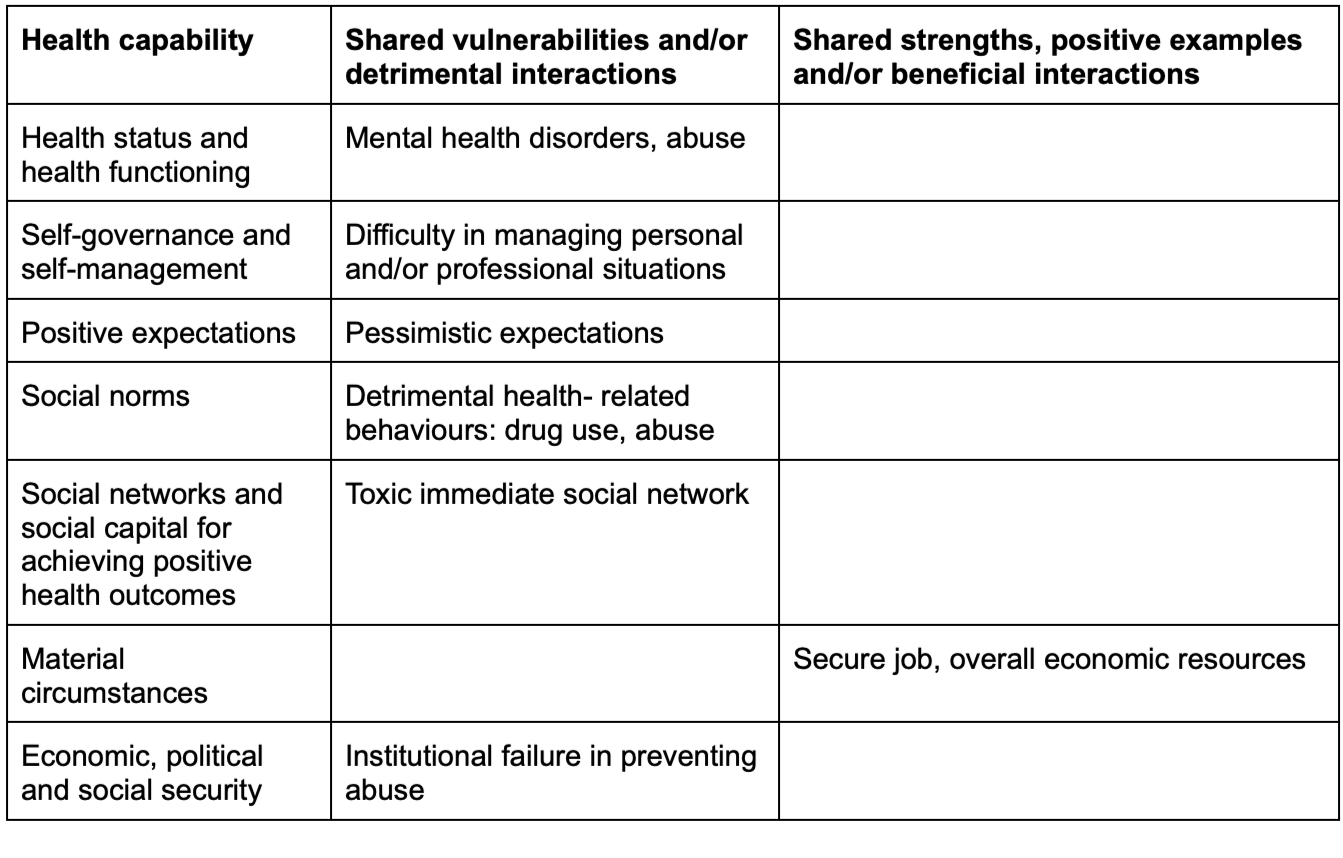
Adverse Childhood Experiences (ACEs), such as abuse, neglect, or growing up in a household affected by substance abuse or violence, play a critical role in shaping a child’s short-, medium-, and long-term health and well-being. Because the Health Capability Profile examines the ability to be healthy spanning the entire life course, it recognizes that childhood environments have lasting effects on how people think, cope, make decisions, and care for themselves. Repeated exposure to stress in childhood overwhelms a child’s developing nervous system, leading to short-, medium-, and long-term challenges with emotional regulation, concentration, and feelings of safety, even when some protective factors, like financial stability or a protective parent, are present. V’s case study helps illustrate this.
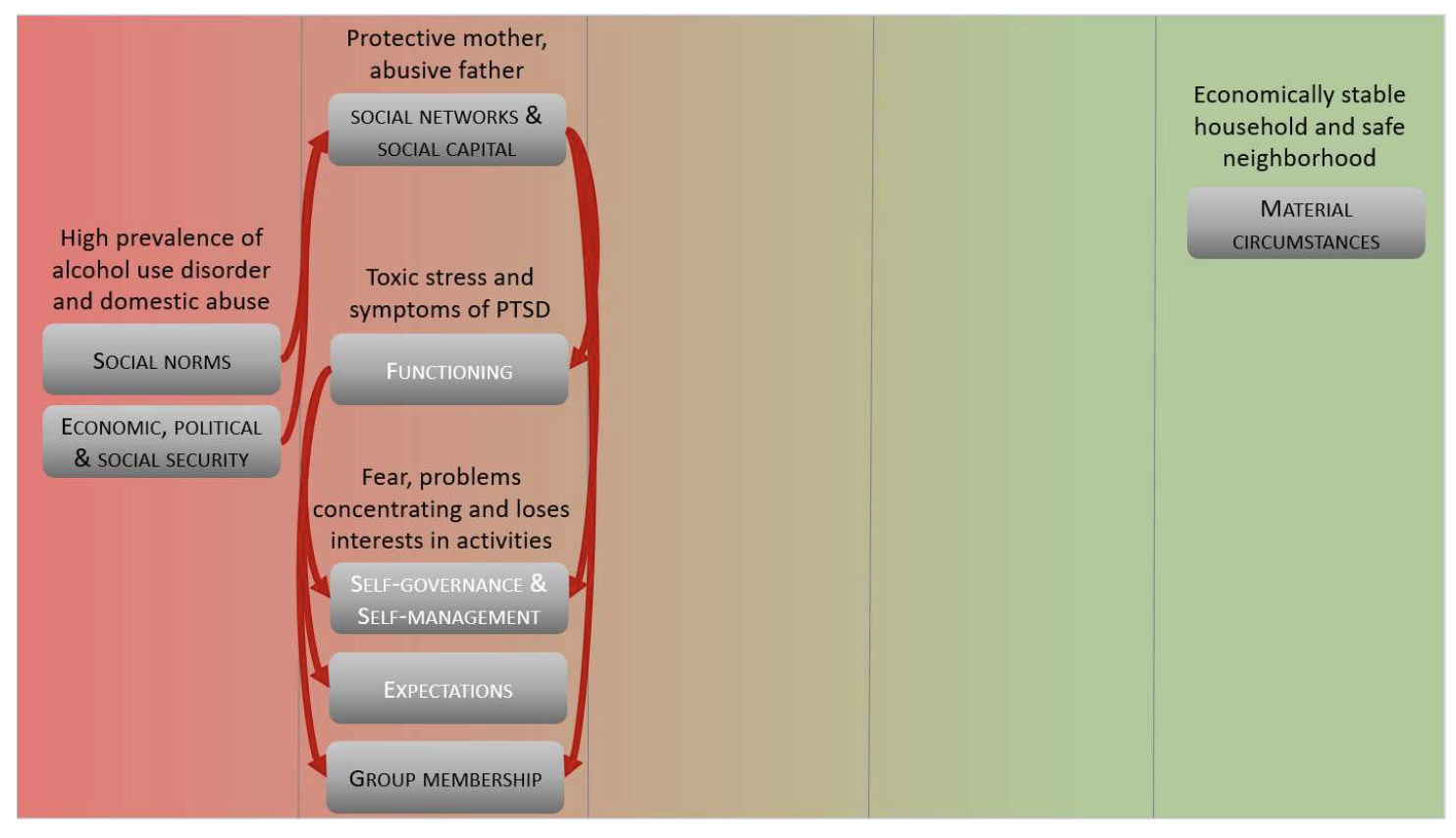
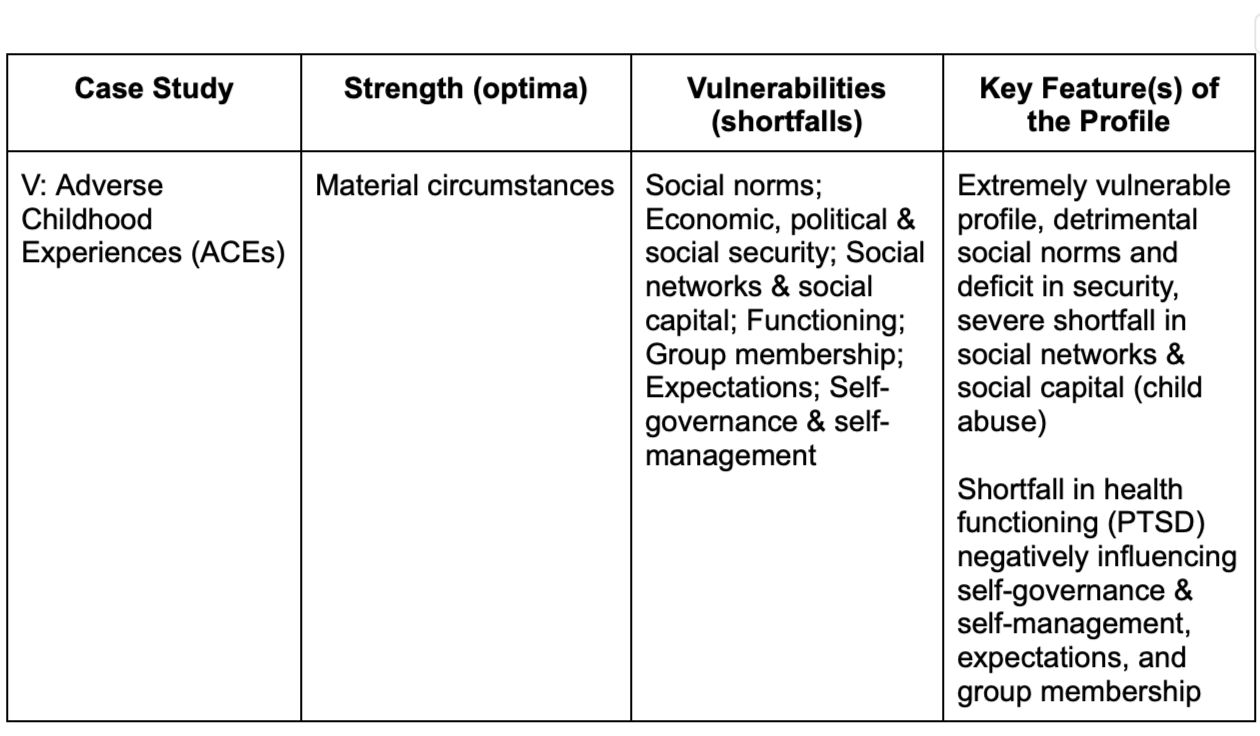
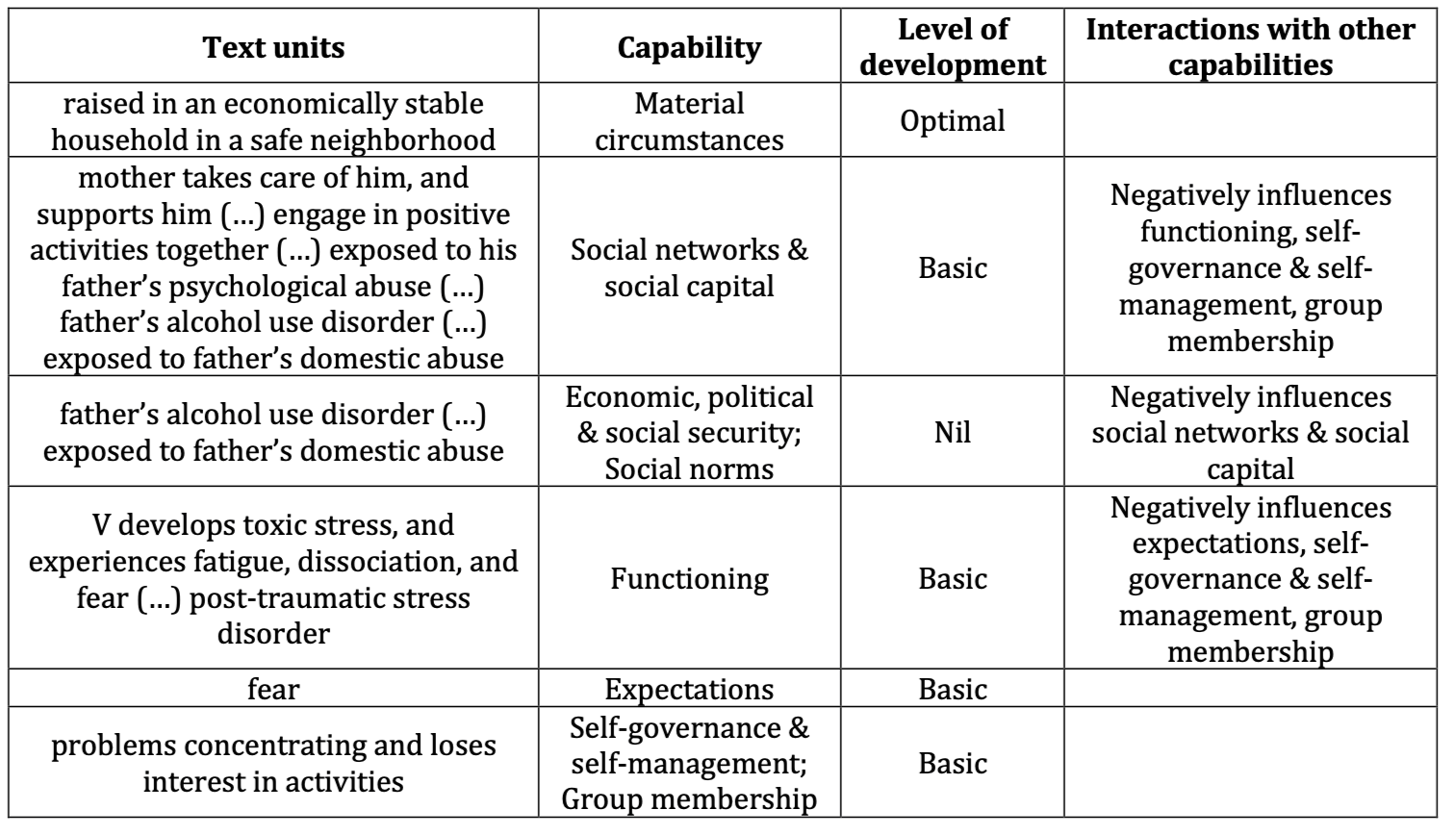
V was raised in an economically stable household living in a safe neighborhood. V’s mother takes care of him and supports him. They regularly engage in positive activities together [112]. However, from a very young age, V has been exposed to his father’s psychological abuse through pervasive blaming, belittling, terrorizing, and intimidations [113]. In addition, V is a victim of his father’s alcohol use disorder and has been exposed to his father’s domestic abuse, including of his mother and siblings [114]. As a result, V develops toxic stress, and experiences fatigue, dissociation, and fear [115]. Despite his mother’s support, V has problems sleeping and upsetting dreams, angry outbursts and extreme emotional reactions. He has problems concentrating and loses interest in activities – symptoms of post-traumatic stress disorder [116].