GENDER-BASED AND SEXUAL HARASSMENT
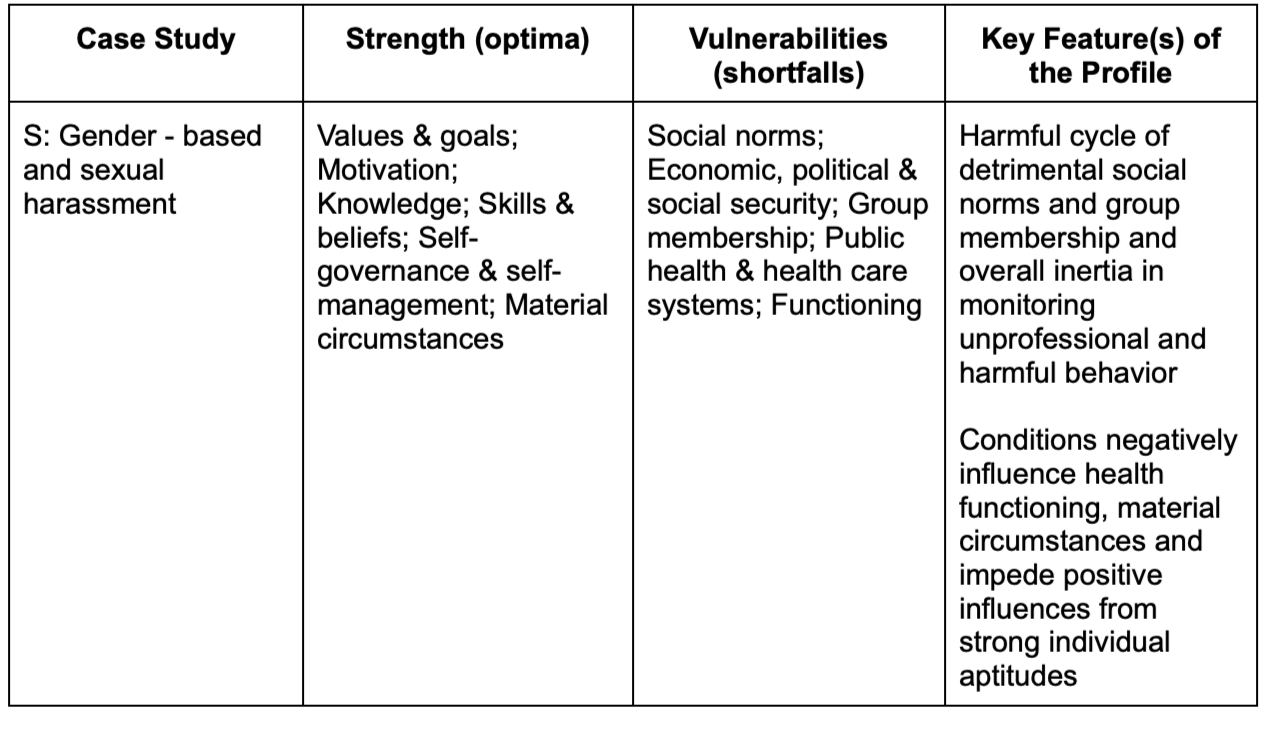
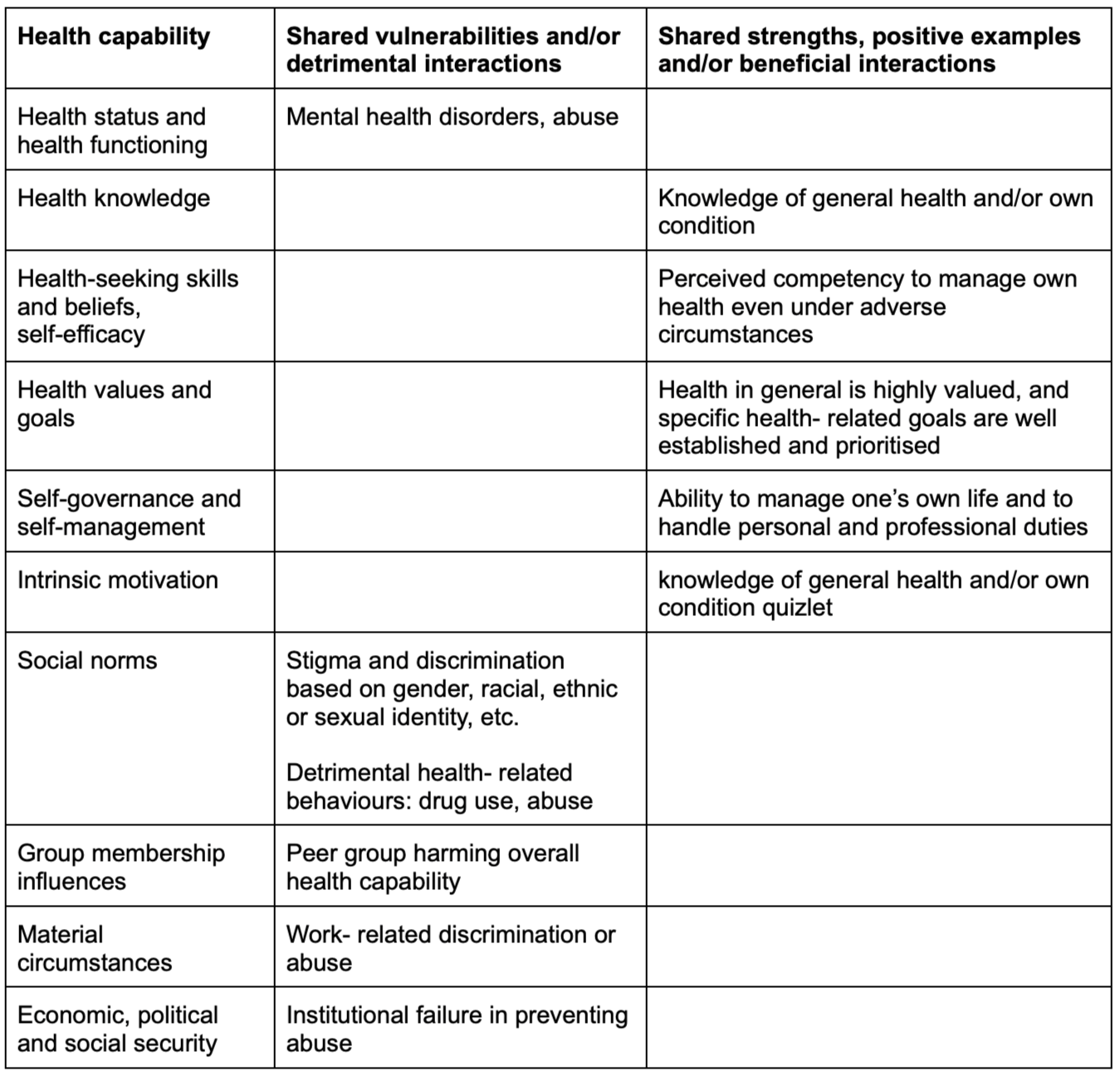
Workplace gender-based harassment involves persistent, unwelcome behaviors, such as misogynistic remarks, intimidation, and professional sabotage, that are rooted in unequal power relations and discriminatory social norms. When organizations fail to monitor misconduct or enforce accountability, these behaviors can become normalized, creating hostile work environments that undermine professional functioning and harm short-, medium-, and long-term health and well-being. The Health Capability Profile demonstrates that even individuals with strong health knowledge, self-efficacy, and healthy coping strategies can experience serious harm when exposed to sustained workplace harassment, demonstrating the powerful role that institutional and organizational conditions play in shaping health, well-being, and agency. S’s case study helps illustrate this.
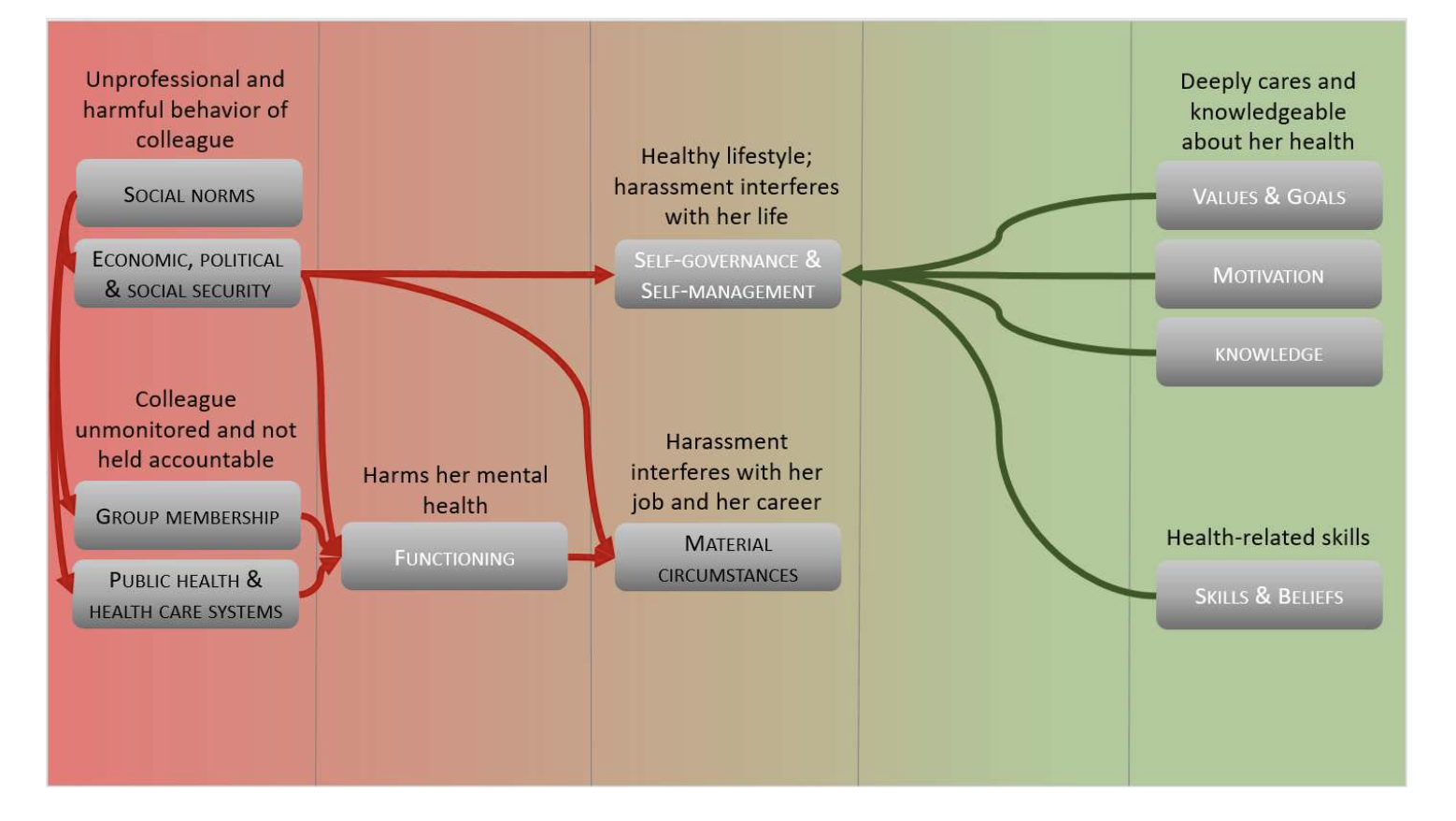
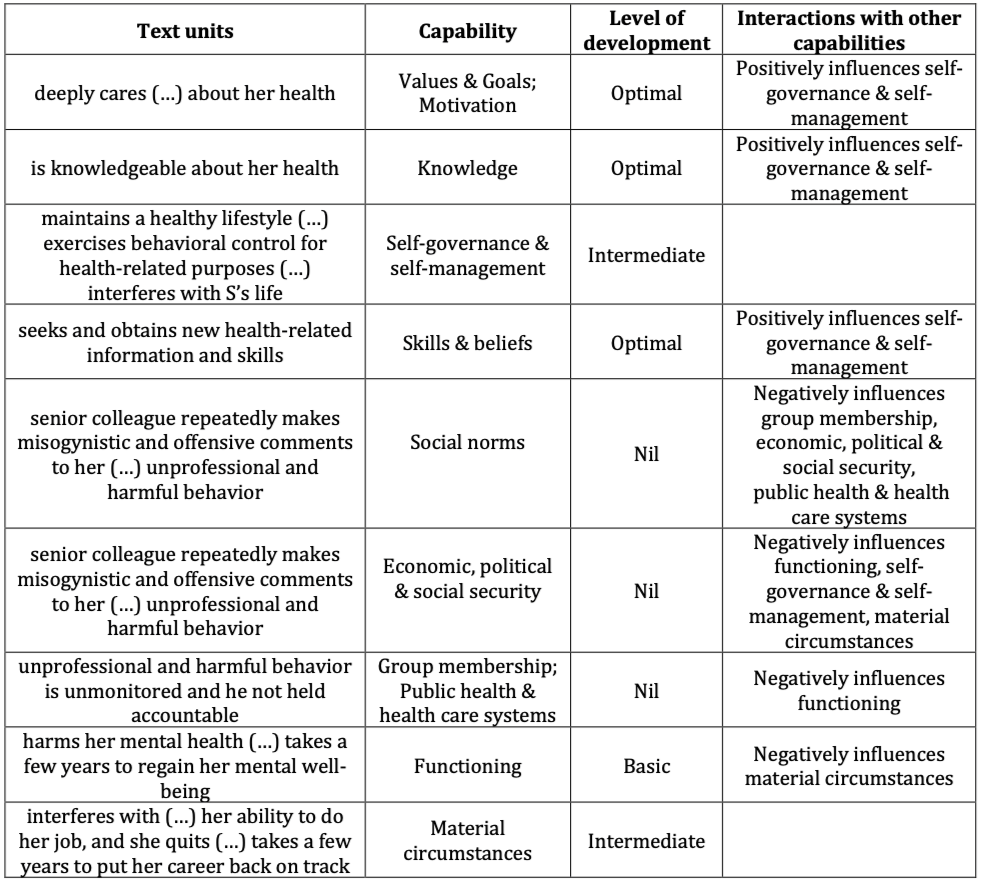
S’s experience illustrates this dynamic. S is a woman who deeply cares and is knowledgeable about her health. She maintains a healthy lifestyle, regularly seeks and obtains new health-related information and skills, and exercises behavioral control for health-related purposes. At work, in person, by e- mail and texts, a senior colleague repeatedly makes misogynistic and offensive comments to her. He frequently demeans and unfairly targets her for sabotage [96]. He engages in a pattern of unwelcome hostile and negative behavior towards her [97]. His unprofessional and harmful behavior is unmonitored and he is not held accountable for his misconduct. It interferes with S’s life, harms her mental health and her ability to do her job, and she quits [98]. It takes a few years to regain her mental well-being and put her career back on track [99].