INTIMATE PARTNER VIOLENCE
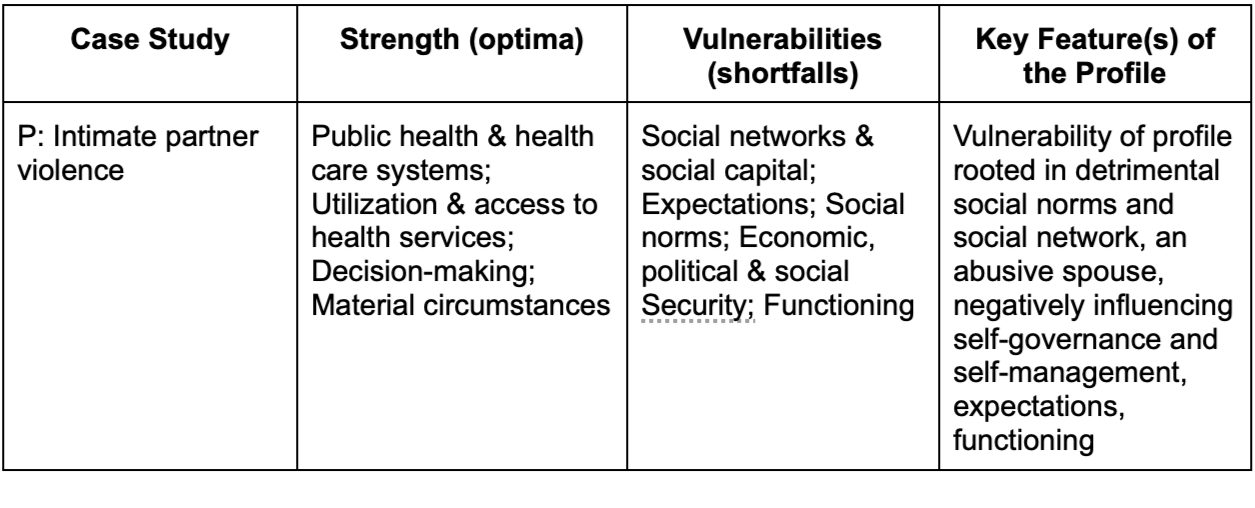
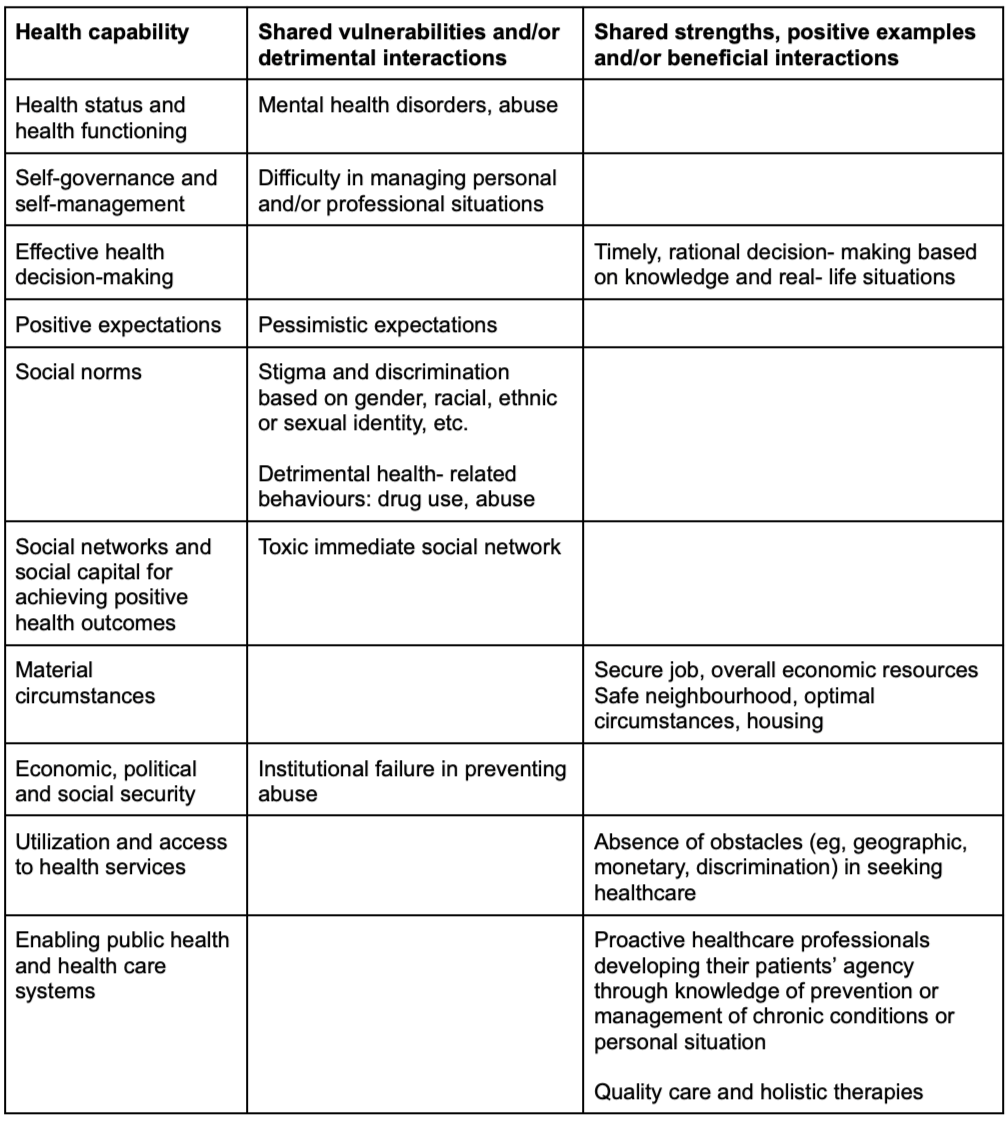
Intimate partner violence (IPV) refers to a pattern of abusive behaviors used by one partner to maintain power and control over another. While IPV can involve physical violence, it also operates through non-physical violence such as emotional manipulation, gaslighting, intimidation, constant monitoring, and threats of self-harm. These non-physical abusive behaviors can be just as, if not more, damaging as physically abusive behaviors, gradually undermining a person’s sense of safety, autonomy, and trust in their own judgment. Fear of retaliation, social stigma, and limited institutional protection can further prevent survivors from seeking help. IPV is a gendered phenomenon. Through the Health Capability Profile, IPV is understood not as an isolated personal issue, but as the result of harmful social norms, unequal power dynamics, and systemic barriers that shape survivor’s agency, and short-, medium-, and long-term health and well-being. P’s case study helps illustrate this.
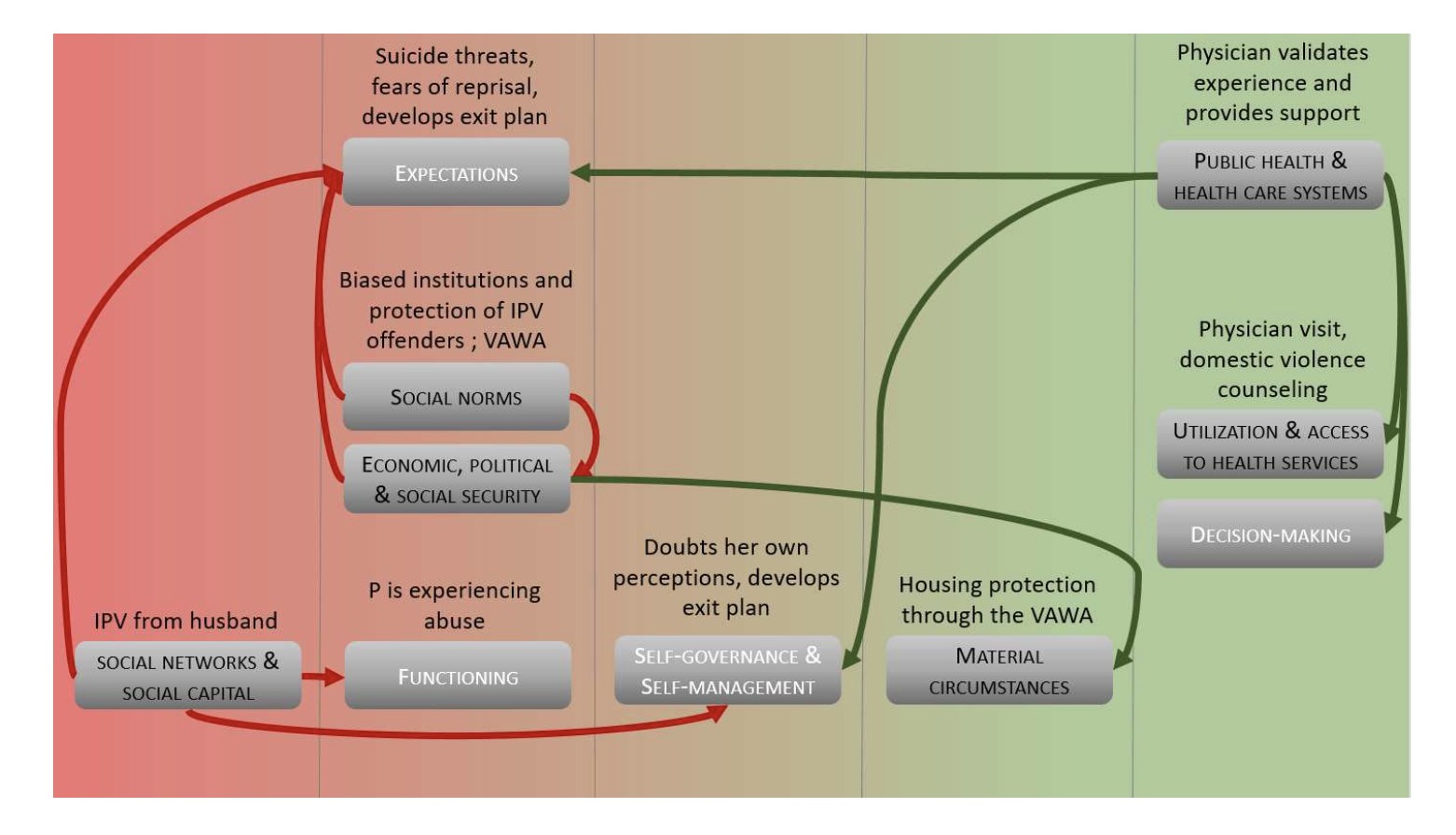
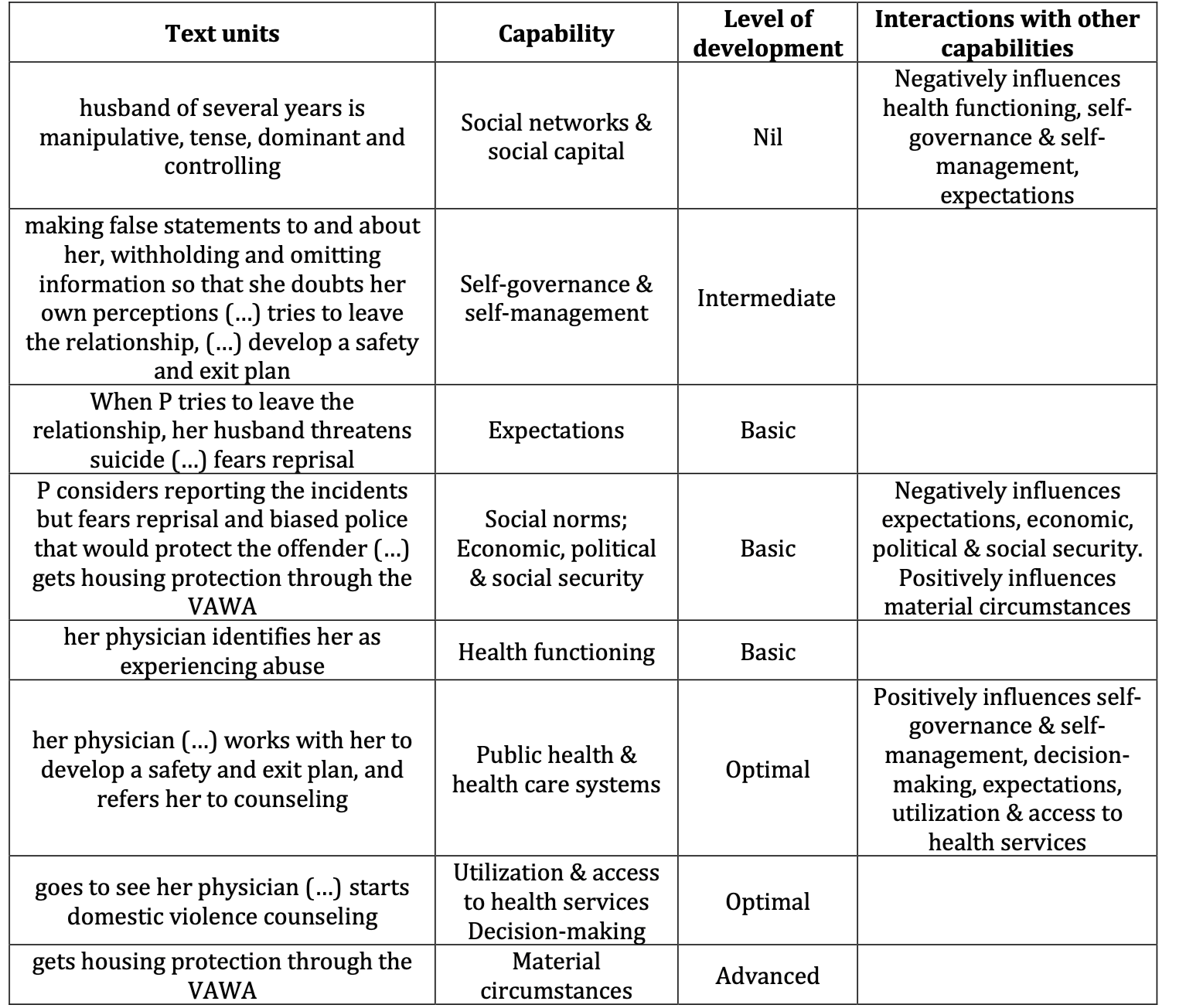
P’s husband of several years is manipulative, tense, dominant and controlling in their relationship [80]. He regularly manipulates, humiliates and degrades her [81]. He repeatedly harasses her with unwanted phone calls, texts, e-mails, and cards [82], and has threatened to harm himself. P’s husband also gaslights her, making false statements to and about her, withholding and omitting information so that she doubts her own perceptions. He blames her for his abuse and accuses her of making things up. When P tries to leave the relationship, her husband threatens suicide saying, “I’ll kill myself if you leave me” [83]. P considers reporting the incidents but fears reprisal and a biased police that would protect the offender [84]. She goes to see her physician who identifies her as experiencing abuse, validates her experience of intimate partner violence (IPV), works with her to develop a safety and exit plan, and refers her to counseling addressing trauma from IPV [85]. P starts domestic violence counseling and gets housing protection through the Violence Against Women Act (VAWA) [86].